


Are you looking for the best affiliate tracking software to scale your campaigns in 2025? Whether you’re running paid ads or managing your affiliate partners, you need a tracker that shows exactly where your clicks, conversions, and revenue are coming from.
But with so many options out there offering widely different tracking features and pricing plans, it can be hard to know where to start. That’s why we’ve created this article comparing 7 of the top affiliate tracking software to help you find the best fit.
Before we jump into a more detailed breakdown for each of the top 7 affiliate trackers, let’s first do a quick comparison. The criteria used in this comparison are:
Based on this, there is no right or wrong answer on which is the best tracker for you. You need to determine that depending on your own needs.
Each tracker has their own strengths, for example ClickFlare offers the best value overall due to balanced prices and advanced features; BeMob offers the most budget-friendly option for beginners with their free plan; Binom provides more control with self-hosting (but you need to have deep technical knowledge to manage it); and so on.
It’s no news that the affiliate marketing space has become overly competitive in recent years. With higher traffic costs and smaller profit margins, small optimizations can make a big difference.
That’s where the right ad tracking software comes in. These tools give you a clear view of which campaigns, ad creatives, pages, or ad networks are actually converting so you can make fast, data-informed decisions.
By doing this with the right ad tracking software, you can significantly cut ad spend and boost ROI.
So, what actually makes tracking software good?
Now, let’s take a deeper look at what each affiliate link tracking software has to offer in terms of features and pricing:
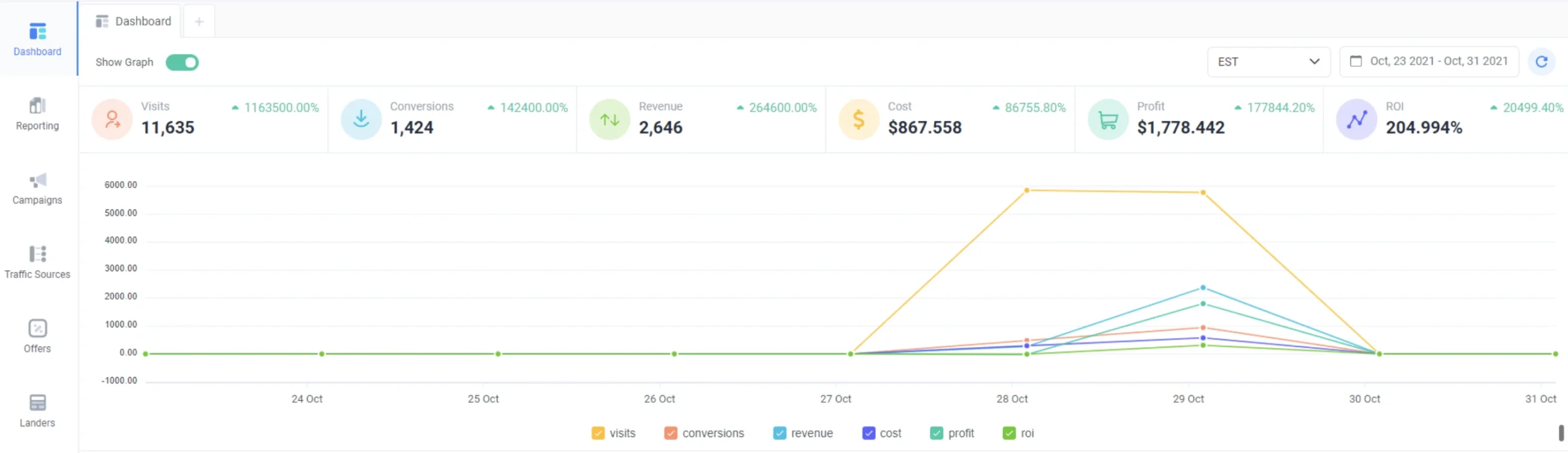
ClickFlare is built for mid-sized businesses or big organizations focused on performance marketing campaigns (affiliate, search arbitrage, lead generation, ecommerce, etc). ClickFlare has quickly grown into one of the best-selling affiliate tracking software tools for marketers looking to scale with real-time insights and large number of integrations (with ad networks, affiliate networks, search feed providers etc).
ClickFlare’s Conversion API is one of the most flexible in the industry, and it lets you send accurate data back to your ad networks to improve performance, giving you full control over which events to send, how to send them, and even apply filters like “don’t send conversions from outside the US”.
ClickFlare ranked highest in the Value for Money comparison because advanced features like the Conversion API are included in all plans. Each plan also offers generous event tracking limits, a free setup call, and 24/7 live chat support. You also get access to tools like A/B testing, keyword optimization, built-in Tag Manager, and a modern UI with real-time stats.
✅ Pros: Best value for money.
❌ Cons: While it excels at tracking, it currently offers fewer built-in automation tools compared to some other trackers.
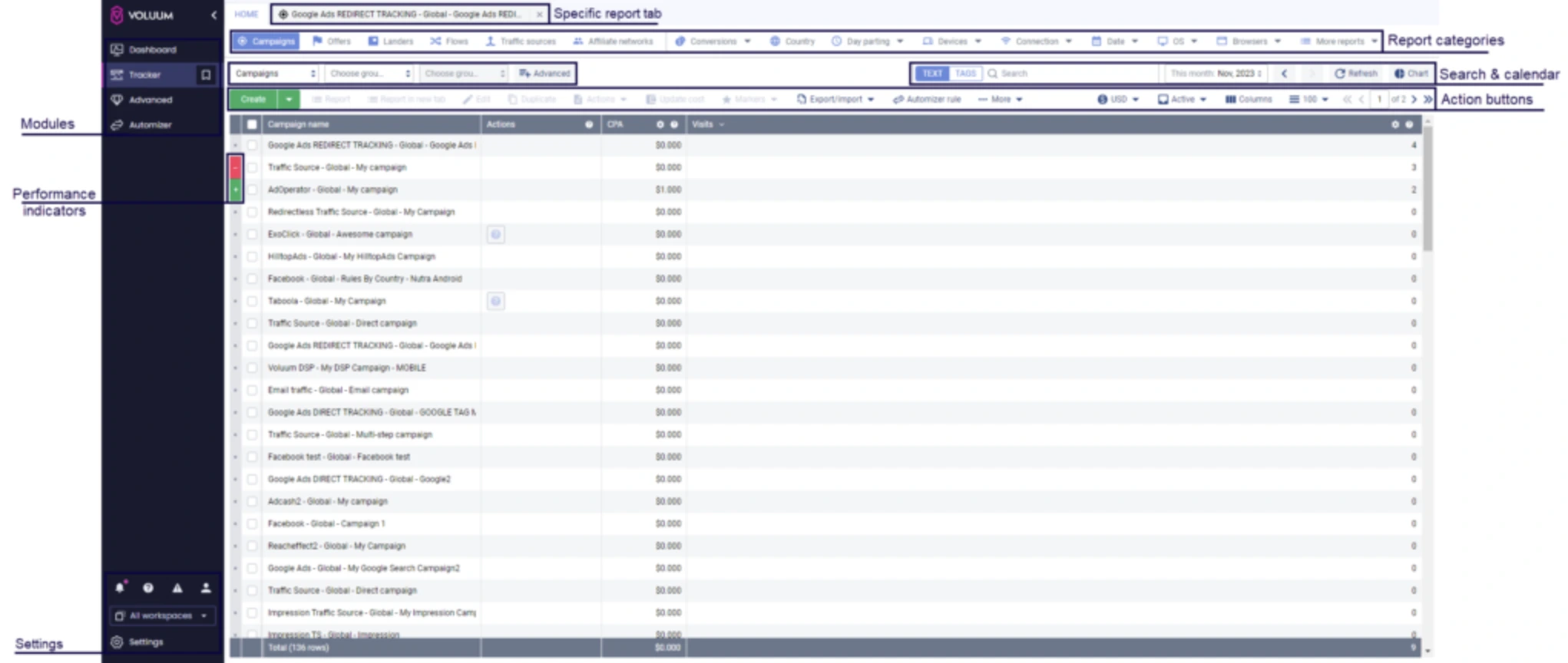
Voluum is best for high-volume affiliates or agencies managing complex campaigns. It’s mainly known for combining tracking and automation in one platform.
With their built-in automation tool, Automizer, you can create rules that automatically pause campaigns, change bids & budgets, or distribute traffic to your best-performing pages. They also have a modern UI, real-time reports, and anti-fraud kits to help filter out bad traffic.
However, many of their advanced features are locked or limited for the lower pricing tiers. For example, the Conversion API feature can only be used starting from $1,999/month.
You are also more limited in how many rules you can set, how many events or campaigns you can track, and how much support you get (only limited time of chat support and setup calls for the lower pricing plans).
✅ Pros: Combines advanced tracking & automation in one platform.
❌ Cons: It can be very pricey, and many crucial features are locked behind high-end pricing tiers.
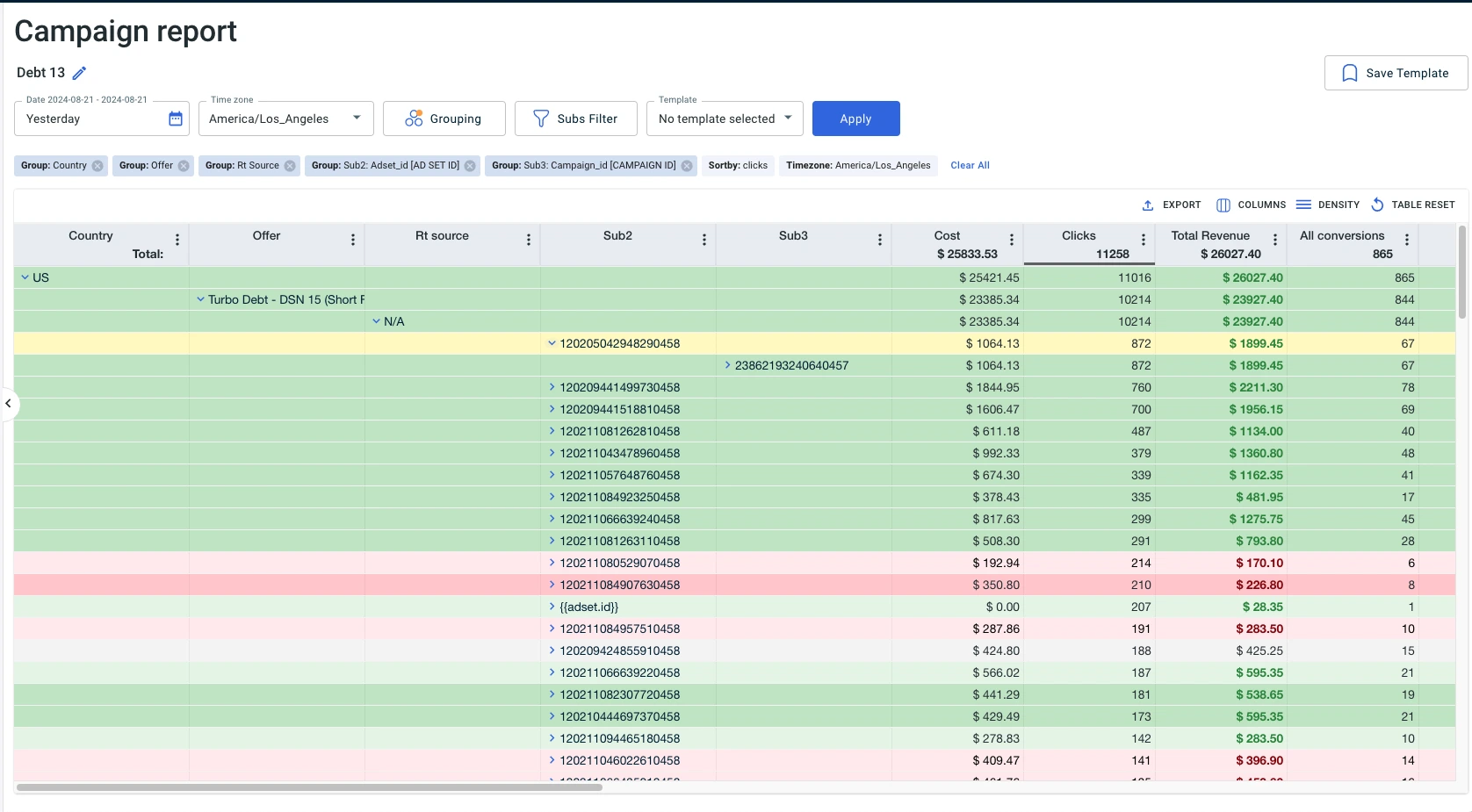
RedTrack is another well-known ad tracker for affiliates and ecom & DTC. They have different pricing plans for these different business models, so, for the purpose of this article we will focus on their affiliate plans.
They only have two pricing plans, one for solo affiliates and another one for teams. To access more advanced features, you have to contact them for a custom pricing plan.
The two pricing plans offer a good mix of tracking features (such as the Conversion API and 30 minute cost updates) and automation features (automatically pause campaigns, ads, ad sets etc).
However, once again several features are locked behind extra fees (for example, increasing the cost update frequency or applying scale rules can cost you an extra $200-500 per month; you don’t get access to support chat with the Starter plan etc). Also, online user groups and communities report that the tool frequently experiences bugs and technical issues.
✅ Pros: Includes many integrations and automation rules.
❌ Cons: Monthly event limits and multi-user are capped unless you upgrade to a custom plan, which can limit scalability. Some features can be buggy.
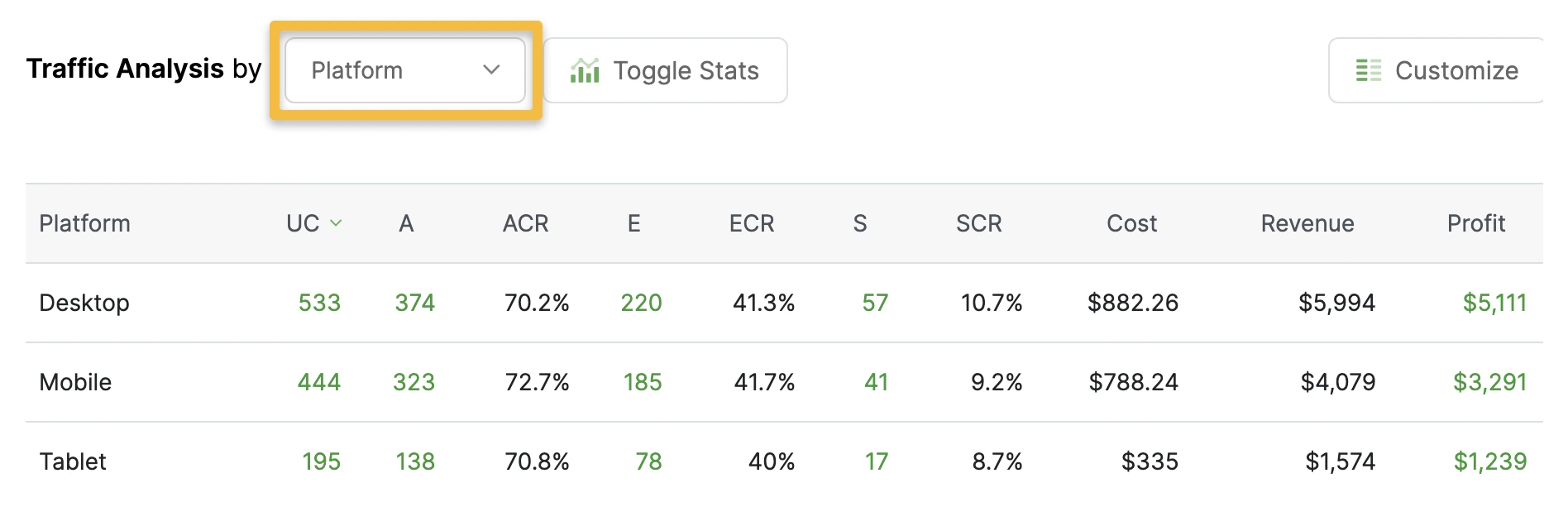
ClickMagick is a US-based ad tracker most suitable for solo affiliates or companies running low to mid traffic volumes.
Like the trackers listed above, ClickMagick also provides features like tracking for all types of traffic and funnels, real-time stats, integrations with popular platforms, and bot filtering. With the higher plans, you can unlock more advanced features such as the Audience Optimization tool, which sends data back to ad platforms, and cross-device tracking.
However, each plan comes with strict monthly click limits, making it very difficult for growing businesses to scale. To put it in perspective, ClickMagick’s highest plan caps at 1 million clicks per month, while ClickFlare offers the same on its starter plan. If you generate more clicks per month, you will need to create multiple different ClickMagick accounts, which can quickly become expensive and more complex to manage.
✅ Pros: Solid tracking and reporting features with real-time stats and bot filtering, best for small teams or solo marketers.
❌ Cons: Limited monthly click allowance, no live chat or call support for the starter plan, and advanced features being locked behind higher pricing tiers.
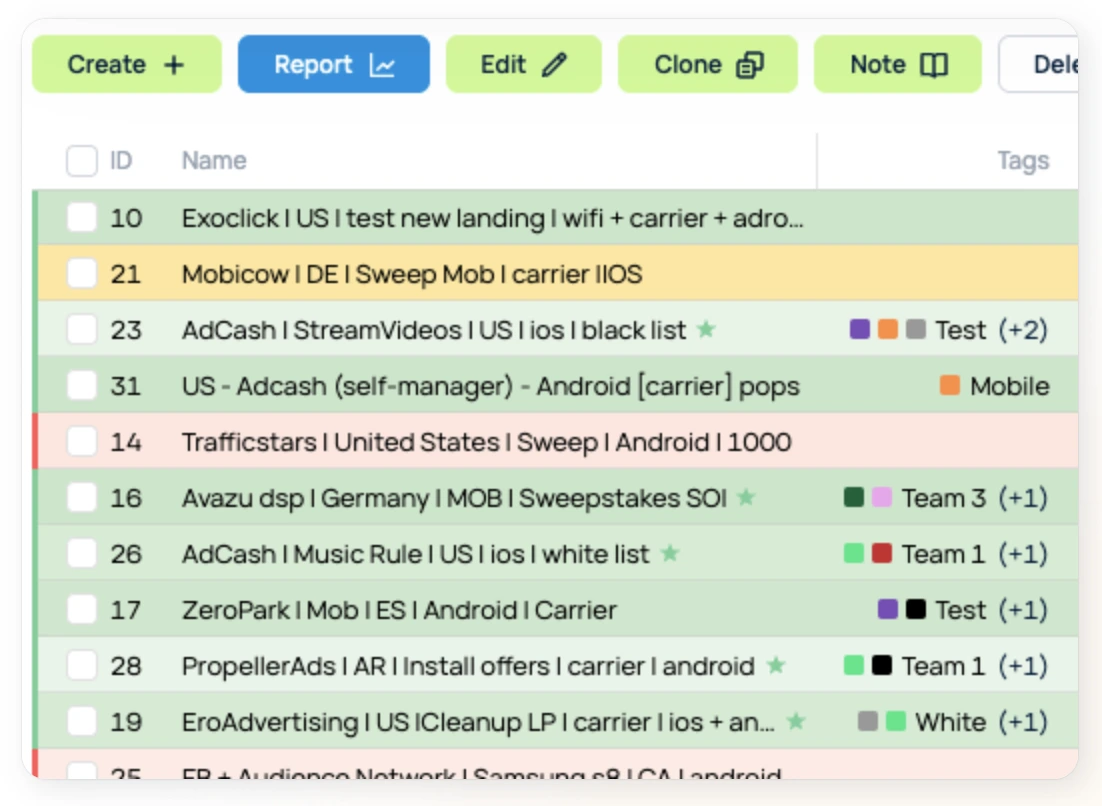
Binom is a self-hosted affiliate tracking software made for advanced media buying or affiliate teams who want full control over their data.
Binom is especially popular in verticals such as native, mobile, push, and pop traffic. A big advantage of Binom is that the traffic caps per month are high, and all plans come with unlimited users and domains. This is due to the fact that Binom is self-hosted.
The self-hosting aspect comes with advantages and disadvantages. On the one hand, you can install Binom on your own private server and have full control over your data. On the other hand, you need to pay for the private server, install it yourself (which can get technical), and maintain it.
Currently, Binom has added the option to choose between self-hosted or cloud for an additional fee.
✅ Pros: Good solution for technical, advanced affiliates who want full control over their data.
❌ Cons: Requires self-hosting and setup on the affiliate side, which can lead to complex management, extra costs, and errors.
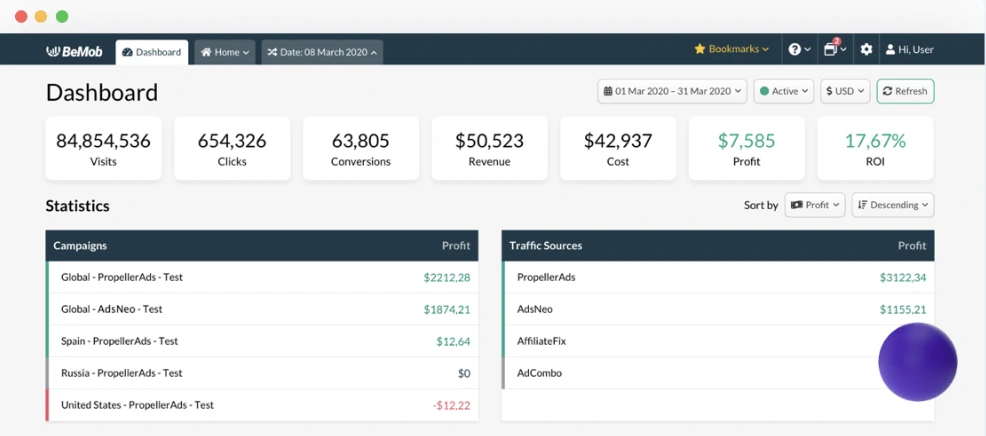
BeMob is a beginner-friendly affiliate tracking platform. If you’re a new affiliate or a small team that wants to test tracking without a big investment, BeMob offers a free version.
The free version only retains your data for 1 month, and it only covers up to 100K events per month (compared to 1 million events per month with ClickFlare’s pricing plan, for example). It also heavily caps the number of campaigns and pages you can track, and does NOT provide access to features like traffic distribution, integrations, attribution and more. If you are not running any paid traffic campaigns, this could be a good solution for you.
The biggest downside with BeMob is scalability. There are strict tracking limitations per each plan, and the pricing structure heavily favors the highest pricing tier with important features like the Conversion API, conditional paths and more only available for extra fees.
Even with the highest plan, you can only track 30 landing pages, have a limit of 5 tracking domains and 4 users, and are capped at 30 million monthly events. This makes it less interesting for larger teams or affiliates running big volumes. BeMob also has no direct API integrations for things like automatic cost updates or real-time revenue.
✅ Pros: Good for complete beginners, with a free version.
❌ Cons: No cost or revenue integrations and no flexible scalability options.
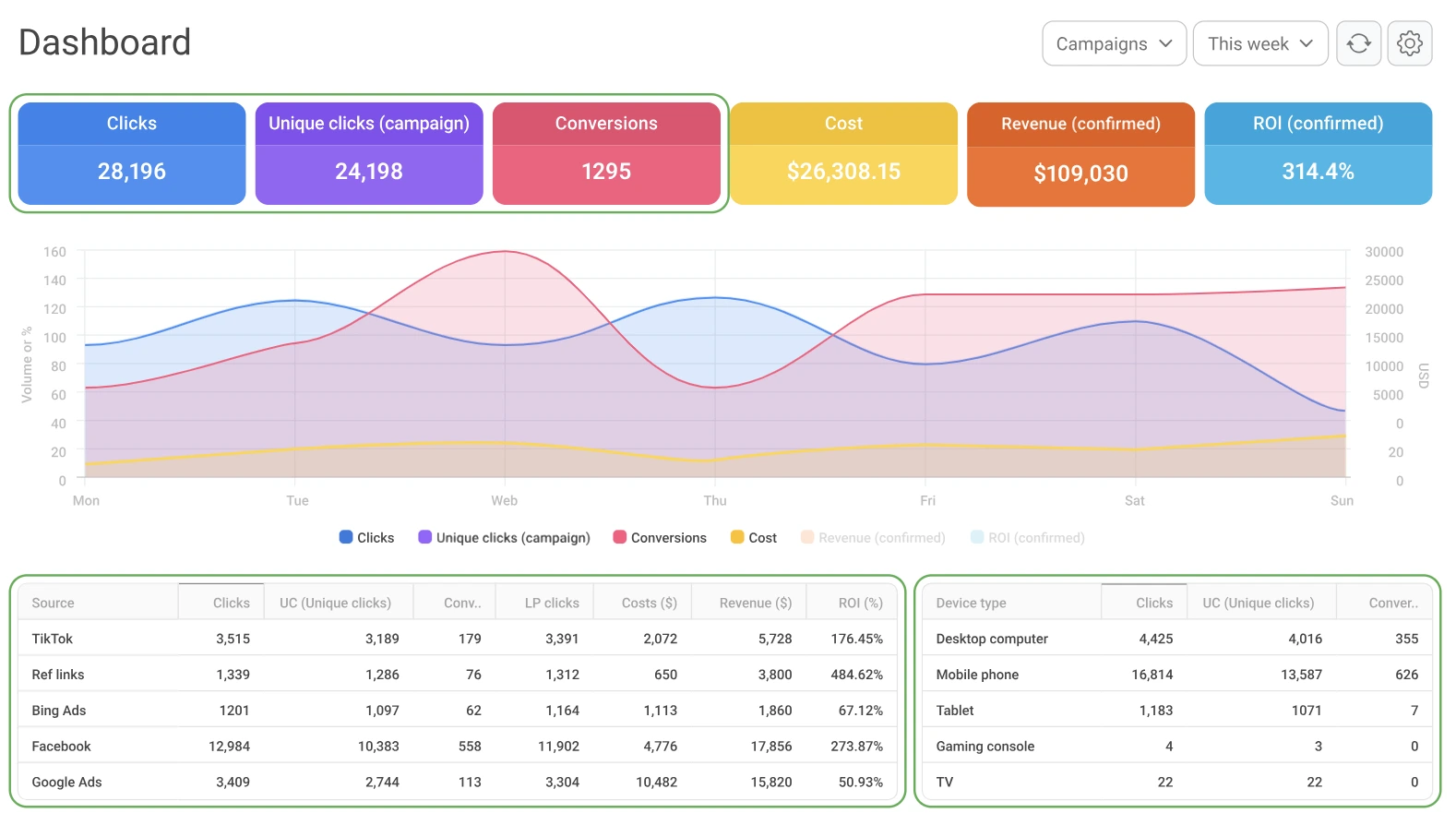
Keitaro is another self-hosted ad tracker. As mentioned before, this comes with upsides since you fully own your data, but on the other hand you need to install the tracker on your own server which requires technical setup and maintenance.
The higher plans include cost tracking and allow users to post back conversions to ad platforms via postbacks.
✅ Pros: Highly customizable tracker that gives users full control of their data.
❌ Cons: You have to do self-hosting and technical setup, which is more difficult to manage.
Choosing the right affiliate tracker is more than just picking software. It's about finding a reliable conversion tracking tool that suits your goals, company size, budget, and technical needs.
Based on our comparison, ClickFlare stands out as the best solution for mid-sized to advanced affiliates who need tracking power, full-on integrations with top ad and revenue platforms, and attribution (Conversion API) for great value in every plan.
For high-volume teams that need built-in automation at an enterprise scale, Voluum offers a premium (although expensive) solution.
If you're a technical affiliate who wants the highest level of control over their data, Binom delivers with their self-hosted solution.
All of the tools listed above are among the best trackers for affiliates in 2025, each offering a unique mix of features, pricing, and scalability.