Most affiliates spend the same amount of effort promoting a $40 product as they do a $4,000 one, then wonder why the income never scales. High ticket affiliate marketing flips that math. Instead of chasing hundreds of small commissions, you promote premium products and services that pay $500, $1,000, or even $5,000+ for a single sale.
The appeal is obvious, but so is the challenge: fewer sales, longer buying decisions, and more expensive traffic mean every conversion has to be tracked accurately or your numbers fall apart. This guide covers what high ticket affiliate marketing is, the best niches and programs, how to get started, and how to make sure you actually get paid for the high-value conversions you drive.
Quick Summary
- High ticket affiliate marketing means promoting premium offers that pay roughly $500 to $5,000+ per sale, so income scales on value instead of volume.
- The most profitable niches include B2B software, online coaching, finance, premium hosting, and luxury goods.
- Success depends on trust-building content and qualified traffic, since buyers research carefully before spending four figures.
- Because each sale is high value and takes time to close, accurate server-side conversion tracking is essential to measure true profit.
What Is High Ticket Affiliate Marketing?
High ticket affiliate marketing is the practice of promoting high-priced products or services and earning a large commission on each sale, typically $500 or more per conversion. Instead of relying on volume, you focus on premium offers where a single sale can match what a low-ticket affiliate earns from hundreds of transactions.
There is no official price line that makes an offer "high ticket," but most marketers use it to describe products that either cost a lot upfront or pay a commission worth a few hundred to several thousand dollars. Common examples include B2B software subscriptions, online coaching and certification programs, financial services, luxury goods, and high-end business tools.
The model works because a 20% to 40% commission on a $2,000 product is dramatically more than the same percentage on a $30 one. You still need to drive qualified traffic and earn trust, but the payoff per converted visitor is far higher.
High Ticket vs Low Ticket Affiliate Marketing
Both models can be profitable, but they reward very different skills. Low ticket is a volume game built on impulse purchases. High ticket is a trust game built on fewer, higher-value decisions. Here is how they compare:
| Factor |
High Ticket |
Low Ticket |
| Commission per sale |
$500 to $5,000+ |
$1 to $50 |
| Sales volume needed |
Low |
High |
| Buyer decision time |
Days to weeks |
Minutes |
| Traffic cost tolerance |
Higher (one sale covers a lot) |
Lower (thin margins) |
| Content required |
In-depth reviews, demos, comparisons |
Short, direct promotions |
| Tracking importance |
Critical (each sale is high value) |
Important, but errors cost less |
Neither is better in the abstract. If you are strong at paid traffic and have patience for longer sales cycles, high ticket usually produces more income from less content. If you prefer fast feedback and high volume, low ticket can suit better.
How Much Can You Earn With High Ticket Affiliate Marketing?
Earnings come down to three numbers: your commission per sale, your conversion rate, and your cost per click. A single high ticket sale can be worth more than a month of low-ticket promotion, but you need enough qualified traffic to land those sales consistently.
Here is a simple example. Say you promote a $2,000 online program paying a 30% commission, which is $600 per sale. If you send 1,000 visitors to your review page at a 1% conversion rate, that is 10 sales, or $6,000. If your traffic cost $2 per click, you spent $2,000 to make $6,000, for a $4,000 profit.
The important takeaway is that high ticket margins can absorb expensive clicks that would bankrupt a low-ticket campaign. A $2 click is fine when one sale pays $600. The same click is a disaster when the product pays you $4. This is exactly why precise cost and revenue tracking matters so much in this model, which we cover further down.
Best High Ticket Affiliate Marketing Niches
The most profitable high ticket affiliate marketing niches share one trait: the buyer expects to spend real money to solve a real problem. These are categories where a $1,000+ price tag feels normal, so commissions are generous and competition is based on trust rather than discounts.
- Business software and SaaS. Marketing platforms, CRMs, hosting, and analytics tools often pay recurring commissions, so one referral can pay you every month it stays active.
- Online education and coaching. Courses, masterminds, and certification programs frequently sell for $1,000 to $10,000 and pay affiliates 20% to 50%.
- Finance and investing. Trading platforms, financial advisory services, and premium subscriptions carry high customer lifetime value, which supports large payouts.
- Health, wellness, and fitness. High-end equipment, supplements on subscription, and coaching packages fall into this bracket.
- Luxury and travel. High-end electronics, watches, and premium travel bookings offer sizable per-sale commissions.
- Web hosting and B2B services. Enterprise hosting, agency tools, and done-for-you services reward affiliates who can reach business buyers.
Pick a niche you can speak about credibly. High ticket buyers research carefully before they commit, and thin, generic content rarely closes a four-figure sale.
High Ticket Affiliate Programs to Know
High ticket affiliate programs exist across almost every premium category. Rather than chasing the single highest payout, look for programs with a product you believe in, a fair cookie window, and reliable tracking and payments. The table below groups common program types and typical commission ranges to show what is realistic.
| Program Type |
Typical Commission |
Payment Model |
| Enterprise SaaS |
20% to 40% recurring |
Monthly recurring |
| Online courses & coaching |
$500 to $3,000 per sale |
One-time |
| Financial services |
$100 to $1,000+ per lead/sale |
CPA or hybrid |
| Web hosting (premium tiers) |
$200 to $2,500 per sale |
One-time bounty |
| Luxury & high-end retail |
5% to 15% per sale |
One-time |
Most high ticket programs are found either directly on a brand's website (look for an "Affiliates" or "Partners" link in the footer) or through affiliate networks that host many offers in one place. Read the terms carefully, since payout timing, refund clawbacks, and cookie duration vary a lot between programs.
How to Start High Ticket Affiliate Marketing
Starting high ticket affiliate marketing is less about finding a secret program and more about building a system that earns trust and tracks results. Here is a practical sequence that works for beginners and experienced affiliates alike.
1. Choose a Niche You Can Sell Credibly
Start with a category you understand or genuinely enjoy researching. Four-figure buyers can spot surface-level content instantly, so pick a niche where you can create detailed, honest reviews and comparisons.
2. Find and Join the Right Programs
Apply to two or three programs with strong products and reliable tracking. Avoid spreading yourself across a dozen offers at once. Confirm the commission, cookie window, and how conversions are reported before you send a single click.
3. Build a Content Platform
Most high ticket sales happen after the buyer consumes content. A blog, YouTube channel, email list, or combination gives you a place to demonstrate expertise, answer objections, and warm up traffic before the pitch.
4. Drive Qualified Traffic
You can use SEO, paid ads, social, email, or a mix. High ticket margins give you room to pay for traffic, but only if you know which sources convert. That is where tracking becomes non-negotiable.
5. Track, Measure, and Optimize
Set up proper conversion tracking from day one so you know exactly which campaign, ad, and keyword produced each sale. Then double down on what converts and cut what does not.
Best Traffic Sources for High Ticket Affiliate Marketing
The right traffic source depends on your budget and skills, but high ticket offers tend to perform best where you can reach people actively researching a solution. A few reliable options:
- Search (SEO and Google Ads). Buyers searching "best [product] for [use case]" are often close to a decision, which suits high-value offers well.
- YouTube. Long-form reviews and demos build the trust a premium purchase requires, and videos keep earning for years.
- Email marketing. A nurtured list lets you follow up over the longer decision window high ticket buyers need.
- Native and paid social. Useful for warming cold audiences with content, then retargeting the ones who engage.
Whichever channels you choose, the goal is the same: match the source to the buyer's research habits, then measure which one actually produces sales. You can go deeper on this in our other affiliate marketing guides.
How to Track High Ticket Affiliate Conversions
This is where high ticket affiliate marketing is won or lost. When each sale is worth hundreds or thousands of dollars, a single misattributed or missed conversion can make a profitable campaign look like a losing one. With so few sales carrying so much value, accurate tracking is not a nice-to-have, it is the difference between scaling and guessing.
A few tracking realities make high ticket harder than low ticket:
- Long decision windows. Buyers often click today and purchase days or weeks later, so short cookie windows and last-click-only reporting lose sales.
- Few conversions, high stakes. With low volume, one dropped conversion skews your entire return on ad spend.
- Expensive clicks. You are paying premium prices for traffic, so you need to know precisely which source, campaign, and ad earned each sale.
- Data gaps in the browser. Ad blockers, cookie restrictions, and privacy rules mean browser-only tracking misses conversions that server-side methods capture.
The fix is server-side conversion tracking. Affiliate networks report sales through a server-to-server postback rather than a browser pixel, which keeps your data accurate even when cookies fail. If you are new to this, our postback tracking guide for affiliates and our breakdown of what a postback URL is walk through the setup step by step.
Tracking High Ticket Campaigns With ClickFlare
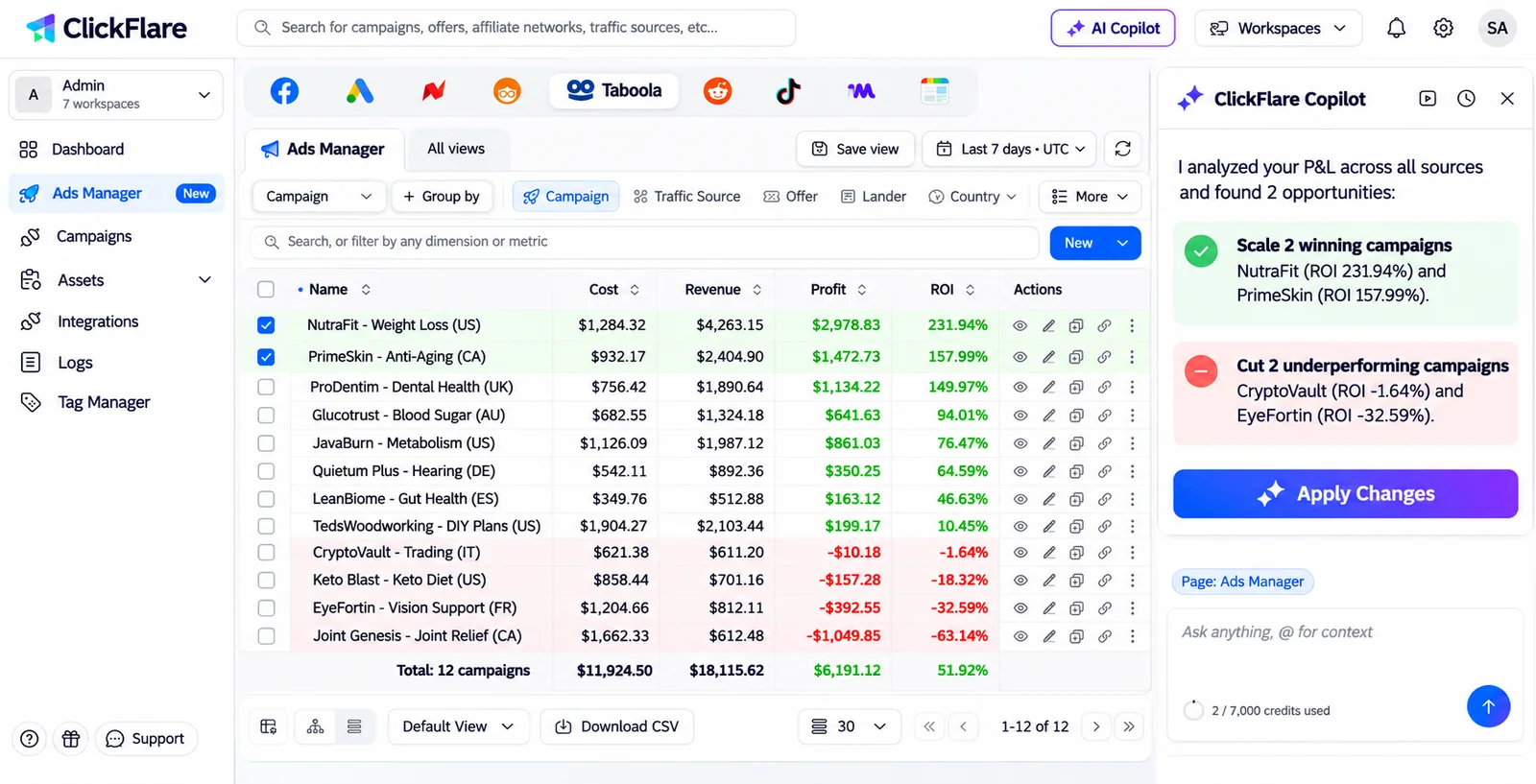
This is where ClickFlare fits. It captures every click and conversion server-side and gives you one P&L view across every traffic source, so cost, revenue, profit, ROI, and EPC sit in a single dashboard. For high ticket, where a single sale can swing a whole campaign from red to green, that one source of truth is what keeps your decisions grounded in real numbers. A few ClickFlare features matter most for high-value offers:
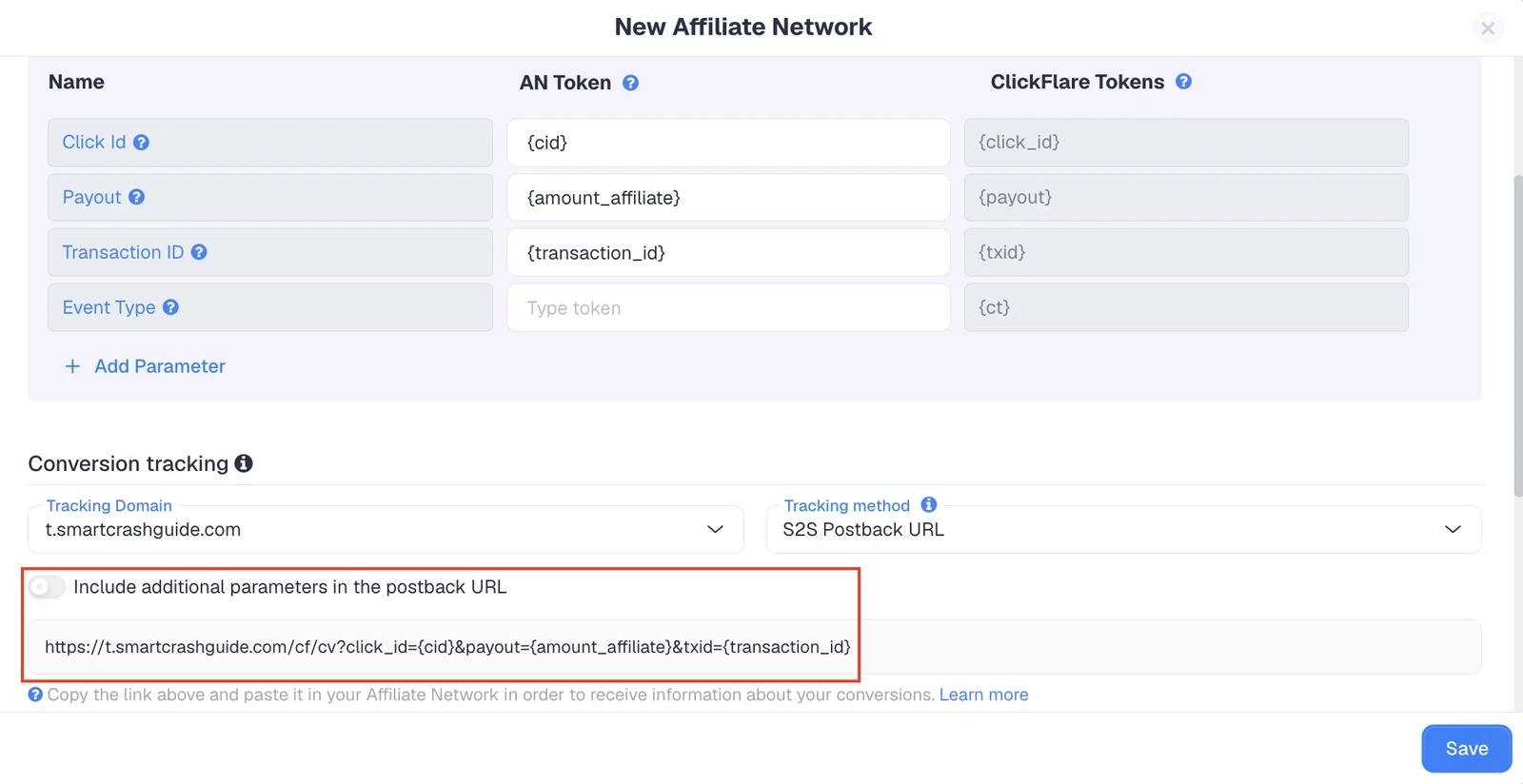
- S2S Postback tracking. ClickFlare's recommended method. The affiliate network sends the Click ID back server-side when a sale happens, so conversions survive even when cookies and pixels are blocked.
- Custom conversion values. Log the real payout for CPA, revshare, or hybrid deals, so a $600 commission shows up as $600 in revenue rather than a generic "1 conversion."
- Conversion API. Push conversions back to all major ad platforms through their native APIs, including Facebook, Google Ads, TikTok, Microsoft, Reddit, and more, with automatic deduplication, so their algorithms optimize toward real buyers rather than raw clicks.
- Ads Manager. Pause or scale the exact ad sets and creatives driving sales from inside ClickFlare, without hopping between ad accounts.
- AI Copilot. Ask it which campaigns are actually profitable and get insights and suggested actions without digging through reports manually.
Track Every Channel in One Dashboard
High ticket buyers rarely convert from a single touch. The same person might discover you on YouTube, click a Google Ad a week later, then finally buy after an email. If each platform reports on its own, every channel tries to claim the sale and your numbers never add up.
ClickFlare tracks all of your channels in one place, pulling cost from ad platform APIs on paid sources and using tracking links on organic ones, so paid and free traffic sit side by side in the same P&L. You generate a ClickFlare tracking link for each channel, then drop it wherever that traffic lives, and drill down from campaign to ad set to creative to keyword:
- Search (SEO and Google Ads). The keyword builder reports EPC per keyword, so you know which search terms produce four-figure sales.
- Email. Add a ClickFlare tracking link to the CTA in your emails so clicks that lead to a sale are attributed correctly.
- Native ads. Attribute conversions down to the individual campaign, widget, and placement.
- Paid social. Hourly cost sync and the Conversion API feed real results back to the platform instead of relying on its inflated self-reporting.
With every channel reporting into the same dashboard, you can compare them on equal footing and move budget to whatever is producing real sales. You can also share a live client report URL if you are running campaigns for someone else.
Setting Up High Ticket Conversion Tracking
The core setup is the same regardless of niche, and it takes a few steps:
- Connect your traffic sources and affiliate networks. ClickFlare works with any network through S2S postback, so you can track high-ticket offers from networks like Digistore24 or ClickBank, or a brand's own in-house program, with cost and conversion data flowing in automatically.
- Build a campaign and generate a unique tracking link for each channel you promote on.
- Add the S2S postback so the affiliate network reports each sale server-side, even when cookies fail.
- Set the custom conversion value so revenue, ROI, and EPC reflect actual dollars, not conversion counts.
- Review the P&L across sources, then use Ads Manager and the AI Copilot to scale what converts and cut what does not.
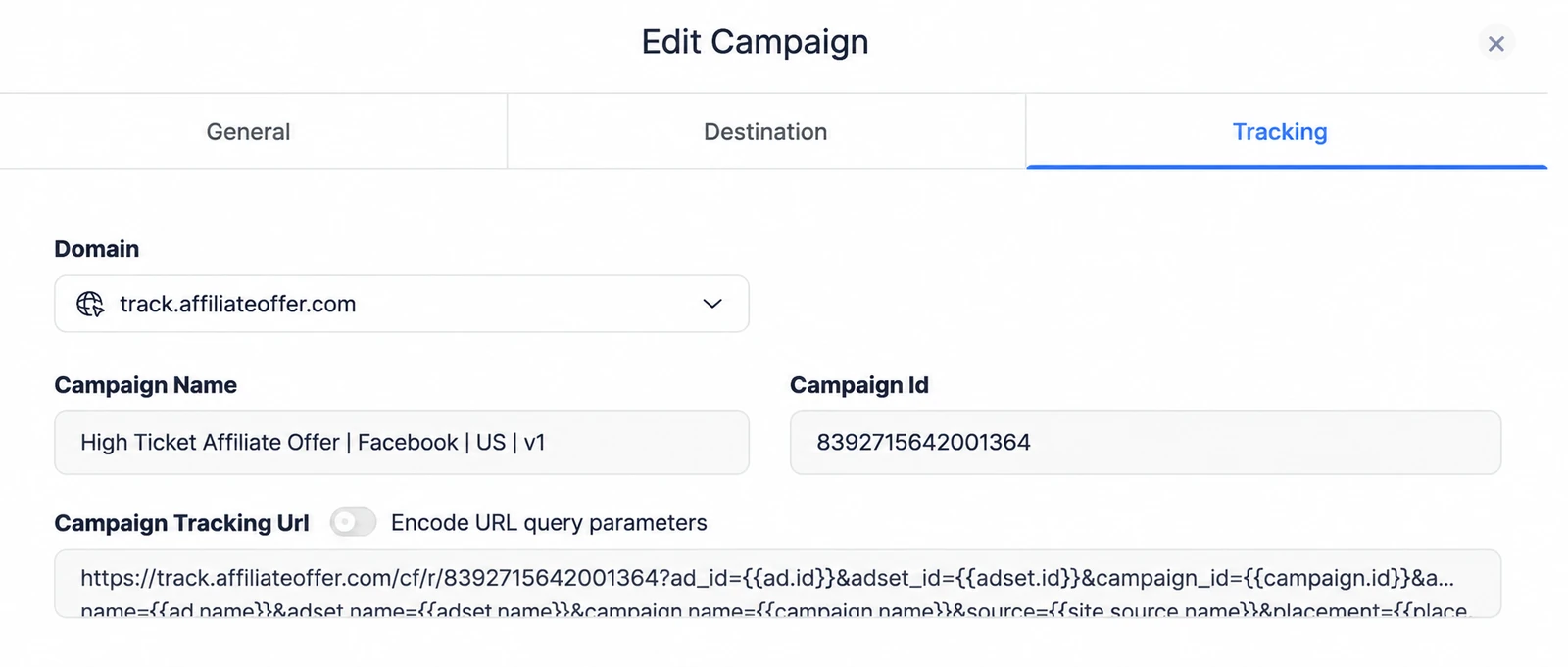
For high ticket campaigns specifically, that means you can spot the one keyword quietly producing $600 sales, confirm a conversion that landed two weeks after the click, and cut the expensive channel that looked busy but never sold.
Common Mistakes to Avoid in High Ticket Affiliate Marketing
- Promoting products you don't understand. High ticket buyers research hard. Shallow content built only for a commission rarely converts.
- Relying on browser-only tracking. Pixels and cookies miss conversions, which is far more costly when each sale is worth so much. Use server-side postbacks.
- Ignoring the sales cycle. Expecting a same-day purchase on a $3,000 offer leads to cutting campaigns before the delayed sales come in.
- Skipping disclosure. Affiliate relationships must be disclosed. The FTC's endorsement guidelines explain what is required, and clear disclosure also builds buyer trust.
- Chasing the biggest payout over the best fit. The highest commission is worthless if the product doesn't match your audience or convert.
Final Thoughts on High Ticket Affiliate Marketing
High ticket affiliate marketing rewards quality over quantity. By promoting premium products in a niche you understand, building content that earns trust, and sending qualified traffic to strong offers, you can earn far more per sale than low-ticket promotion allows. The trade-off is that each conversion matters more, so accurate, server-side tracking is essential. Get the fundamentals right, measure everything, and a handful of high-value sales each month can outperform thousands of small ones.
Frequently Asked Questions
Is High Ticket Affiliate Marketing Legit?
Yes. High ticket affiliate marketing is a legitimate model where you earn large commissions for referring premium products or services. It is not a get-rich-quick scheme, though. Real income comes from driving qualified traffic and earning buyer trust over time.
How Do I Start High Ticket Affiliate Marketing?
Pick a niche you can speak about credibly, join two or three reputable programs, and build a content platform such as a blog or YouTube channel. Then drive qualified traffic and set up conversion tracking so you know which sources actually produce sales.
What Are High Ticket Items for Affiliate Marketing?
High ticket items are products or services that pay large commissions, usually $500 or more per sale. Common examples include business software, online courses and coaching, financial services, premium web hosting, and luxury goods.
How Much Can You Make With High Ticket Affiliate Marketing?
Earnings vary widely based on niche, traffic, and conversion rate. A single sale can pay $500 to $5,000+, so even a few conversions a month can be significant. Success depends on consistent qualified traffic and accurate tracking, not luck.
Do I Need an Ad Tracker for High Ticket Affiliate Marketing?
For paid traffic, yes. Because each sale is high value and buying decisions take time, you need server-side tracking to attribute conversions correctly and measure true profit. A dedicated tracker shows which campaigns earn money so you can scale what works.
Need a hand tracking your high ticket conversions?
Try ClickFlare for free and book a call with one of our tracking specialists who will walk you through connecting your traffic sources and affiliate networks.
TRY CLICKFLARE FREE FOR 14 DAYS →