Black Friday came early. Early-access prices until Nov 8.Black Friday: early-access prices until Nov 8.Early-access price ends in0d00h00m00sClaim the deal




iGaming affiliate marketing is one of the highest-paying corners of performance marketing, and also one of the most misunderstood. Affiliates send players to online casinos and sportsbooks, then get paid when those players sign up and deposit, sometimes for the entire lifetime of the account. The model can be very profitable, but it runs on commission structures, qualifying events, and tracking rules that look nothing like a standard CPA offer.
Treat an iGaming deal like a regular affiliate campaign and you will quietly lose money to untracked deposits and misread payouts. This guide breaks down how iGaming affiliate marketing works, the commission models you will actually see, the verticals and traffic that drive it, and how to track every click through to the deposit.
Quick summary
iGaming affiliate marketing is a performance model where affiliates promote online gambling products, mainly casinos and sportsbooks, and earn a commission when the players they refer register and deposit real money. The "iGaming" label covers online casino games, sports betting, poker, bingo, lottery, and newer formats like crash and crypto games.
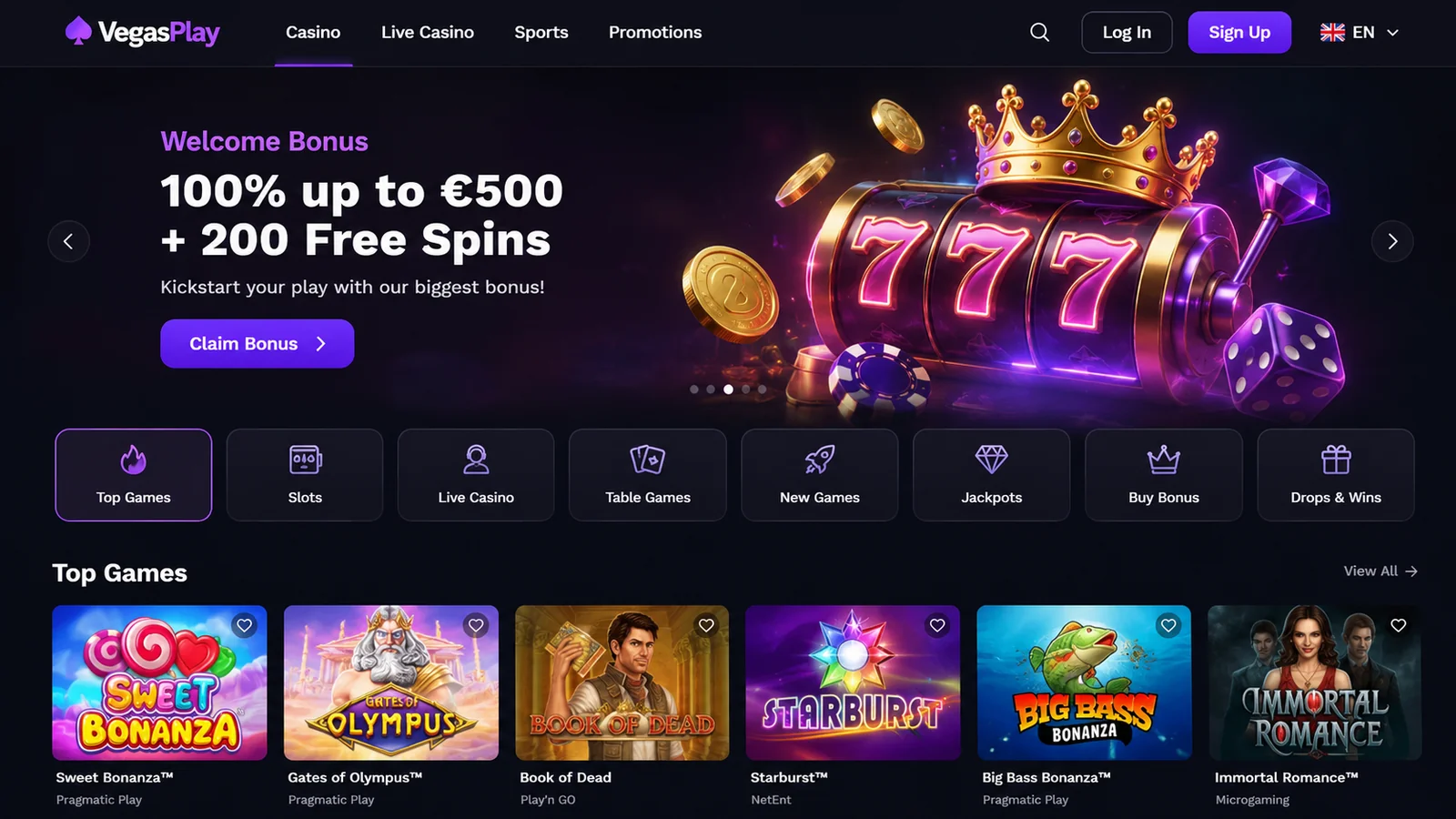
It differs from mainstream affiliate marketing in one important way: the payout is usually tied to the long-term value of a player, not a one-off sale. An ecommerce affiliate gets paid once when someone buys. An iGaming affiliate can get paid on the first deposit, then keep earning a share of what that player loses to the operator for months or years.
Three parties make it work. The operator (the casino or sportsbook) owns the product and the player accounts. The affiliate drives traffic through review sites, ads, content, or social channels. An affiliate network or platform often sits in between, handling tracking links, reporting, and payments, though many large operators run their programs directly.
The flow from click to commission has more steps than a normal offer, and each step is a separate tracked event.
A player clicks your tracking link and lands on the operator's site. If they create an account, that is a registration. If they fund the account for the first time, that is a first-time deposit, usually shortened to FTD. From there, every reload is a repeat deposit, and the operator keeps a running tally of how much net revenue that player generates.
Your payout depends on which of those events your deal is built around. A CPA deal typically pays on the qualifying FTD. A revenue share deal pays an ongoing cut based on repeat deposits and losses. That is why a single referred player can trigger a registration, an FTD, and dozens of later deposits, all of which need to point back to the same original click.
The gap between the click and the money is the part that trips people up. Someone might register today and not make their first deposit until next week, so the tracking has to survive that delay and still credit the right campaign.
Most of the money decisions in iGaming affiliate marketing come down to which commission model you accept. Here are the four you will run into most often.
| Model | How you get paid | Best for |
|---|---|---|
| CPA | A fixed amount for each qualifying first-time deposit | Paid traffic and predictable, upfront cash flow |
| Revenue share | A percentage of the net revenue your players generate over time | SEO and content with long player lifetimes |
| Hybrid | A smaller CPA upfront plus ongoing revenue share | Balancing immediate cash with long-term income |
| CPL | A fixed amount per lead or registration, before any deposit | Free-play, social, and sweepstakes-style offers |
CPA pays you a flat fee, say 150 dollars, for every player who makes a qualifying first deposit. "Qualifying" is the word to watch: the operator usually sets a minimum deposit amount, and sometimes a minimum wager, before the FTD counts. CPA is popular with paid media buyers because the income is predictable and arrives quickly.
Revenue share pays you a percentage, often 25 to 45 percent, of the net gaming revenue (NGR) your players produce. NGR is roughly what players lose minus bonuses, payment fees, and taxes. The upside is that one good player can pay you for years. The risk is that a single big winner can drag your revenue down for that period.
Hybrid deals combine a reduced CPA with an ongoing revenue share. You get a smaller upfront payment on the FTD plus a cut of what the player generates afterward. For most affiliates building a sustainable business, hybrid is the sweet spot, because it funds your ad spend now while still rewarding player quality later.
CPL pays for a registration or lead, before any money changes hands. It is less common in real-money iGaming and shows up more in social casino, sweepstakes, and free-to-play offers. Because no deposit is required, CPL payouts are low and operators watch lead quality closely.
Two affiliates on the "same" 35 percent revenue share deal can earn very different amounts, because the fine print changes everything. Before you send traffic, confirm these:
iGaming is not one audience. The vertical you choose shapes your content, your traffic options, and the kind of player you are sending.
| Vertical | What it covers | Typical angle |
|---|---|---|
| Online casino | Slots, table games, live dealer | Bonus and game reviews, "best casino" lists |
| Sports betting | Pre-match and in-play wagering | Odds comparison, tips, event previews |
| Poker | Cash games and tournaments | Strategy content, rakeback, room reviews |
| Bingo and lottery | Online bingo rooms, lotto and number games | Community content, jackpot coverage |
| Esports and crypto games | Esports betting, crash and crypto-native games | Streamer and community-led promotion |
Casino and sports betting are the two biggest, and they attract the most competition. Poker, bingo, and esports are smaller but can be easier to build authority in, especially if you already understand the audience.
Where you get traffic matters as much as the offer, partly because gambling is a restricted category on most mainstream ad channels.
This is where iGaming affiliate marketing separates the profitable affiliates from the ones guessing. The funnel has several events, the money arrives late, and much of it happens server-side, so browser-based tracking alone will miss conversions.
A deposit does not happen in the user's browser the way an ecommerce checkout does. The operator confirms it on their own servers, often days after the click, and then reports it back. Cookies and pixels decay, get blocked, or simply are not present at the moment of the deposit, so relying on them means lost conversions.
This is exactly what ClickFlare is built around. Its primary tracking method is server-to-server (S2S) postbacks, so when a player hits one of your funnel events, the operator fires a server-side postback to ClickFlare carrying the click ID, and the conversion is recorded no matter what the browser is doing. If you are new to this, our guide on what a postback URL is walks through it, and the postback tracking guide for affiliates covers how S2S works end to end.
Registration, FTD, and repeat deposits are different events, and you want to see each one on its own rather than lumped into a single "conversion" count. In ClickFlare's iGaming tracking, you handle this with Custom Conversions. Go to Settings and add one conversion per event, giving each a name and a parameter, for example register, ftd, and deposit.
ClickFlare supports up to 20 custom conversions, and each one has a toggle for whether it counts toward your main Conversions column, your Revenue column, or both. That control matters for iGaming: on a CPA deal you would make the FTD your main conversion, while on revenue share or hybrid you would let the Deposit conversion feed the Revenue column so your reporting reflects real player value.
Because registration, FTD, qualifying deposit, and revenue are tracked as separate events, ClickFlare reports them in their own columns alongside NGR, so you always know which part of the funnel a number came from. Attribution is click-level and holds across devices and sessions, which matters when a player registers on their phone and deposits later on a laptop. Cost is pulled automatically from your traffic source APIs, so the reporting shows true CPA per GEO, source, and creative instead of a blended average.
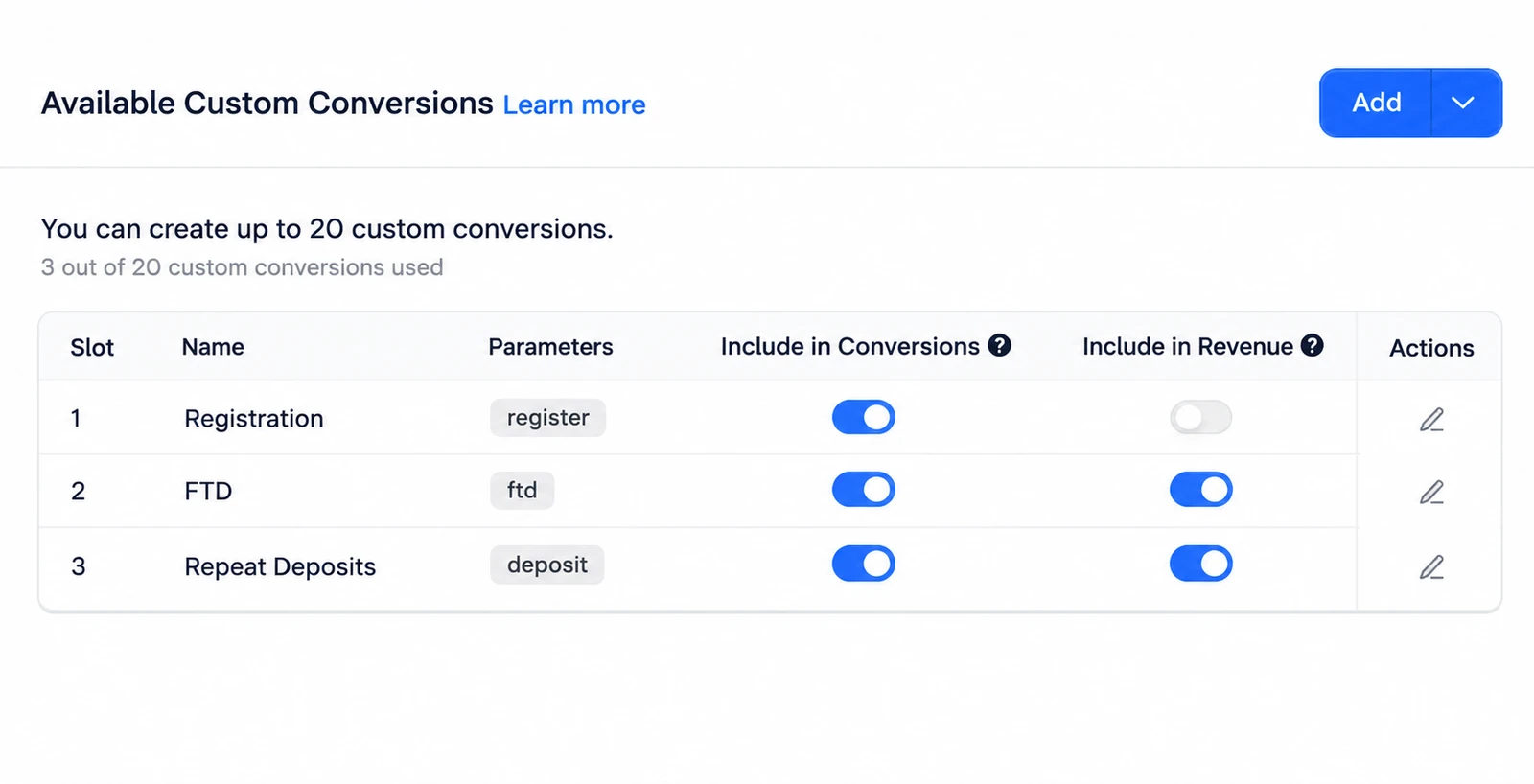
Append ClickFlare's click ID to the operator's offer URL with the {cf_click_id} macro, then give the network a postback for each event. Each postback carries the click ID, the event parameter, a payout, and a transaction ID. A first-time deposit postback, for example, looks like this:
https://your-domain.com/cf/cv?click_id={click_id}&ct=ftd&payout={amount}&txid={transaction_id}
In practice you rarely build these by hand. iGaming offers usually run through affiliate platforms like Income Access, MyAffiliates, and Cellxpert, and ClickFlare includes pre-configured affiliate network templates for most of them. You add the network from a template, the postback is set up for you, and you map the registration, FTD, and deposit events to the right custom conversions.
ClickFlare, like most trackers, ignores a repeated click ID by default, which is a problem when the same player deposits ten times. The transaction ID (txid) solves it. Each deposit sends the same click_id with a fresh txid, so ClickFlare treats the tenth reload as a new conversion rather than dropping it as a duplicate, and it will not double-count a deposit if a postback fires twice.
That single parameter is what lets you attribute a player's full value, the FTD plus every repeat deposit, back to the one click and campaign that brought them in.
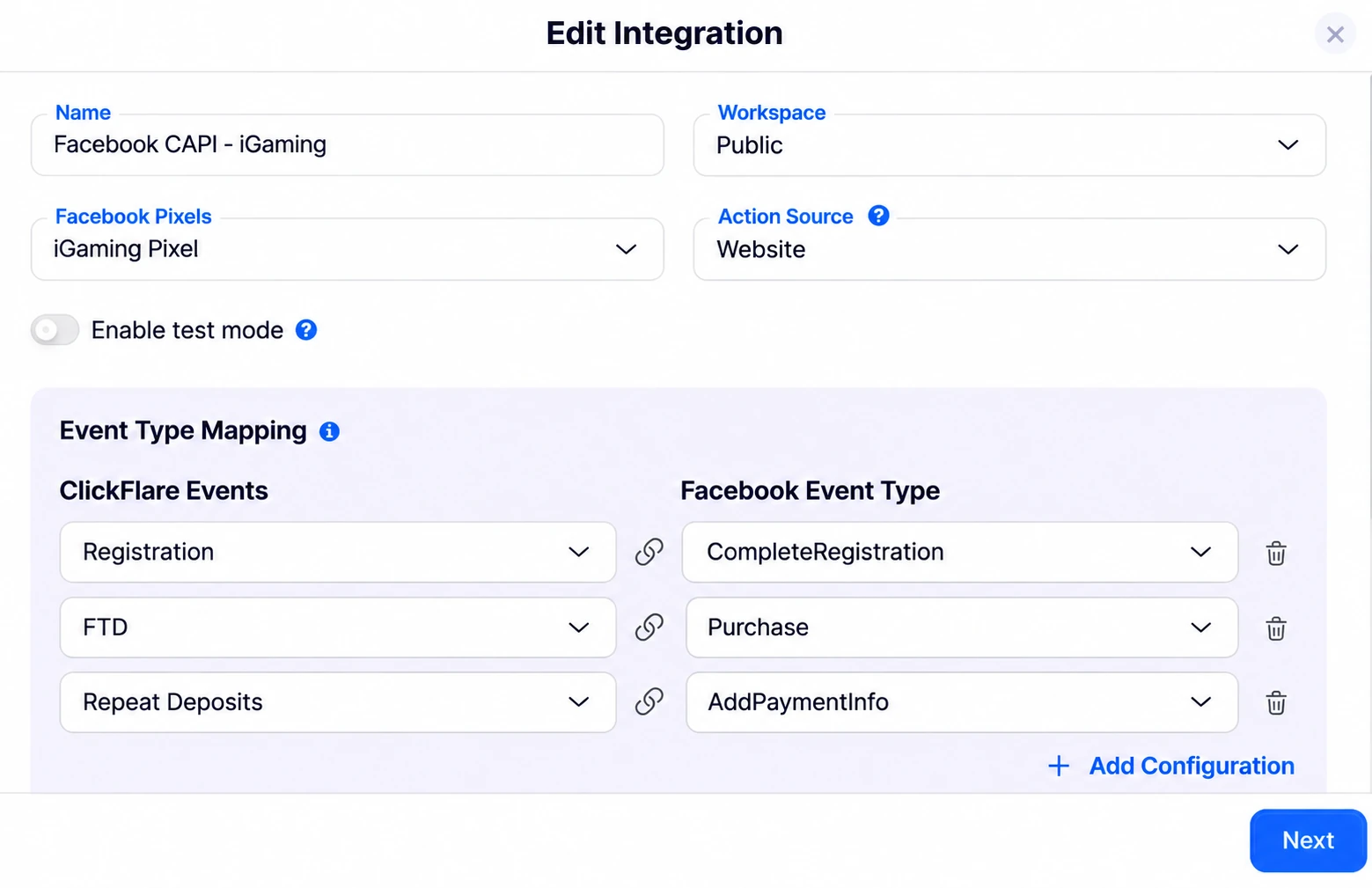
Tracking deposits is only half the value. ClickFlare can send those FTD signals back to the ad platforms through their conversion APIs, including Meta CAPI, Google Enhanced Conversions, and TikTok Events API, so the platforms optimize toward players who actually deposit rather than anyone who clicks. You can apply conditional rules, for example only passing FTDs above a set deposit threshold, while keeping registrations, FTDs, and qualified deposits as separate events.
Tracking is the core job, but if you run more than one operator, ClickFlare can also decide where each player goes. You can route traffic by GEO, device, OS, language, or any custom parameter, keep players on operators licensed in their country, and split volume across operators with caps and instant failover to a backup when one hits its limit. Weighted distribution and the AI Smart Traffic feature push more budget toward the GEOs and campaigns producing the best FTD rate, NGR, or cost per FTD, so your spend follows player quality rather than raw clicks.
Gambling is regulated market by market, and affiliates are part of the compliance chain whether they like it or not. Promoting an operator into a country where it is not licensed can put both of you at risk.
A few non-negotiables apply almost everywhere. Only promote licensed operators in the markets they are allowed to operate in, and geo-target accordingly. Respect age limits, usually 18 or 21 depending on the jurisdiction. Include responsible gambling messaging, and never target self-excluded players or minors. In the UK, for example, affiliate marketing falls under the same advertising rules the operator must follow, as set out by the UK Gambling Commission, and signposting support through services like BeGambleAware is standard practice.
Getting this wrong is not just an ethics problem. Operators claw back commissions, and regulators fine advertisers, so compliance protects your income as much as your conscience.
iGaming affiliate marketing rewards the affiliates who understand two things: how players are actually valued, and how to track them accurately from click to deposit. The commission models, the qualifying events, and the long delay between a click and the money all make this harder than a standard offer, which is exactly why clean, server-side tracking is such an advantage. Get the setup right, record every event back to its original click, and you can see which campaigns bring in players who deposit, not just visitors who bounce.
iGaming affiliate marketing is a performance model where affiliates promote online casinos and sportsbooks and earn commissions when referred players register and deposit real money. Payouts are usually based on a qualifying first-time deposit or a share of the player's ongoing net revenue.
They get paid through one of three main models: CPA, a fixed amount per qualifying first deposit; revenue share, a percentage of the net revenue their players generate; or hybrid, which combines a smaller upfront CPA with ongoing revenue share.
FTD stands for first-time deposit. It is the first real-money deposit a referred player makes into their account, and it is the event most CPA commissions are paid on, usually once it meets the operator's minimum qualifying amount.
Because deposits happen on the operator's servers, often days after the click, and not in the user's browser. Server-side postback tracking records those events regardless of cookies or browser restrictions, so conversions and repeat deposits are not lost.
It is legal in regulated markets when you promote licensed operators to audiences allowed to access them. Affiliates must follow local advertising rules, respect age limits, include responsible gambling messaging, and avoid targeting restricted or self-excluded users.
Need a hand with iGaming tracking?
Try out ClickFlare for free and book a call with one of our tracking specialists who will walk you through tracking registrations, FTDs, and deposits from a single click.